Entryway Cabinet: Clever Storage Solutions for a Clutter-Free Home
News Details
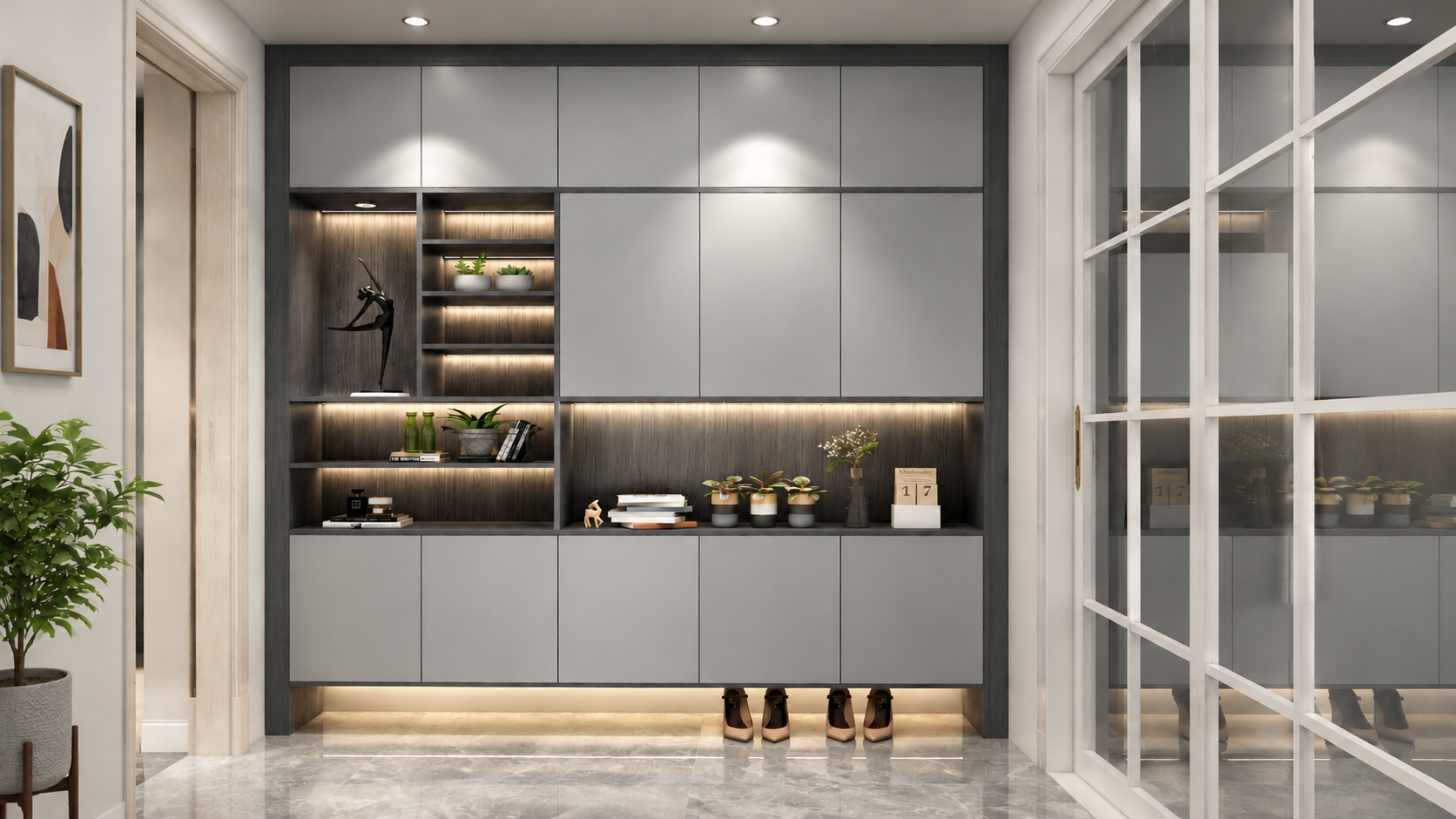 The entryway is the first space people see when they enter a home. However, shoes, bags, keys, and coats can quickly make it look messy. An entryway cabinet offers a simple way to keep these daily items in order while making the space feel warm and welcoming.
For homeowners, interior designers, property developers, and furniture buyers, the right cabinet should do more than provide storage. It should also fit the room, match the interior style, and make daily life easier.
JIASHI offers custom whole-house cabinetry, including entryway storage designs that combine closed cabinets, open shelves, drawers, lighting, and shoe storage. These features give buyers more ways to create a practical entrance that suits each project.
Why Choose an Entryway Storage Cabinet?
An entryway storage cabinethelps keep everyday items close at hand without leaving them in plain sight. For example, closed doors can hide shoes and bags, while open shelves provide space for keys, small plants, or home decorations.
Moreover, a well-planned cabinet can make a small entrance feel more open. Wall-mounted or floating units leave more floor space visible, which can help a narrow hallway look less crowded.
Before choosing a cabinet, consider the available wall space, the number of people in the home, and the items that need to be stored. These details will help you choose the right size and layout.
Shoe Cabinet Entryway Ideas for Everyday Use
A shoe cabinet entryway design is useful for homes where shoes often collect near the front door. Instead of leaving footwear on the floor, you can use shelves, drawers, or closed compartments to keep it organized.
Here are three practical ideas:
-
Slim shoe storage: A shallow cabinet can work well in a narrow entrance where floor space is limited.
-
Shoe cabinet with a bench: A built-in seat makes it easier to put on and take off shoes. Add closed storage below the seat to keep the area neat.
-
Mixed open and closed storage: Use closed doors for daily shoes and open shelves for items you need to reach quickly.
JIASHI’s featured designs include entryway cabinets with floating shoe storage, shoe drawers, and padded benches. Some designs also combine coat hooks and display shelves, helping several functions fit into one area. This type of layout can be useful for residential developments and custom furniture projects that need both style and function.
How to Choose the Right Hallway Cabinet
A hallway cabinet should fit the space without blocking doors or walkways. Therefore, measure the wall width, cabinet depth, and available height before placing an order.
Next, think about the storage layout. Tall cabinets can hold coats and bags, while lower units work well for shoes and small daily items. Drawers are useful for keys, gloves, pet leads, and other things that are easy to lose.
The finish also matters. Light colors can make a small hallway feel brighter, while wood-grain finishes add warmth. For a more modern look, handleless doors, clean lines, and integrated LED lighting can create a neat, built-in effect.
For larger projects, custom cabinetry offers more freedom to match the cabinet size, finish, and storage features to the room. JIASHI provides whole-house custom cabinetry for residential and commercial projects, making it a potential option for buyers looking for coordinated storage solutions.
How to Build a Basic Cabinet Drawer
If you are planning a simple cabinet or working with a furniture maker, it helps to understand the basic drawer structure. A cabinet drawer usually includes a front panel, two side panels, a back panel, a bottom panel, and drawer slides.
Follow these general steps:
-
Measure the opening. Check the cabinet width, height, and depth. Allow space for the drawer slides.
-
Plan the drawer box. Choose suitable materials and calculate the size of each panel based on the opening and slide requirements.
-
Assemble the box. Join the front, back, and side panels with suitable fasteners or joinery. Keep the corners square.
-
Fit the bottom panel. Secure it according to the drawer design and material.
-
Install the slides. Follow the slide maker’s measurements and instructions so the drawer can move smoothly.
-
Attach the drawer front. Align it with the surrounding cabinet doors and check that the gaps are even.
For a built-in entryway cabinet, drawer size and position should be planned with the full storage layout. This helps prevent wasted space and makes the finished unit easier to use.
How to Attach Cabinets Safely
Knowing how to attach cabinets is important for both safety and a clean finish. The correct method depends on the cabinet type, wall material, weight, and installation system.
For wall-mounted cabinets, first locate suitable structural support, such as wall studs or the correct masonry fixing points. Use mounting rails, brackets, screws, and anchors rated for the cabinet and the wall. Do not rely on drywall alone to support a heavy cabinet unless a suitable rated system is designed for that use.
For floor-standing cabinets, level the units before joining adjacent cabinets. Use the recommended cabinet connectors and check that doors and drawers open without rubbing. Tall or narrow cabinets may also need to be secured to the wall to prevent tipping.
Always follow the manufacturer's installation instructions. For heavy custom units or uncertain wall conditions, use a qualified installer.
A Custom Entryway Solution from JIASHI
Different homes and projects need different storage plans. JIASHI’s featured entryway cabinet designs show several ways to bring useful features together.
One design combines a warm cream finish with dark wood-grain display alcoves and integrated LED lighting. Another pairs a darker cabinet frame with floating shoe storage and lit display shelves. A further design combines shoe storage, a padded bench, and a full-length mirror.
These are useful design references for developers, interior designers, cabinet makers, and distributors planning entryway storage for different room sizes and styles. Rather than treating the shoe cabinet, bench, and display shelves as separate pieces, a coordinated cabinet can bring them together in one layout.
To explore available styles and discuss project requirements, visit the JIASHI official website.
Make Your Entryway Work Better
A well-designed entryway cabinet keeps shoes, bags, and daily items organized while giving the home a more finished look. From a slim shoe cabinet entryway to a full entryway storage cabinet with drawers, a bench, and display lighting, the best choice depends on the space and how people use it.
With careful measurements, a practical storage plan, and safe installation, a hallway cabinet can make the entrance easier to use every day. For custom residential or commercial projects, JIASHI’s cabinetry solutions offer design ideas that bring storage and style together.


