Quartz vs Sintered Stone Countertops for Commercial Projects
News Details
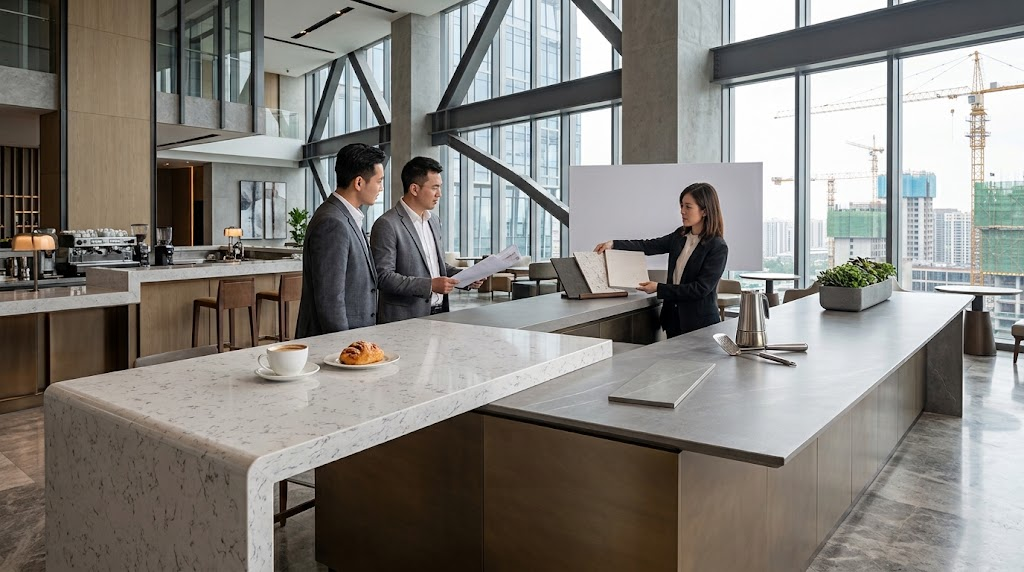
Choosing the right surface materials for commercial construction is a vital step. When you source high-volume materials for multi-family residential towers, hotels, or corporate offices, performance matters just as much as style. Selecting between quartz vs sintered stone countertops requires a clear understanding of how each material behaves under daily commercial use.
At Nantong Jiashi Integrated Home, we work with project developers, interior design firms, and general contractors to deliver custom interior solutions. Understanding surface durability, thermal performance, and fabrication requirements helps team leaders select the right material for every space.
Here is a practical comparison of these two premium surface options to guide your procurement decisions.
Material Composition and Manufacturing
Although both surfaces are engineered products, their underlying manufacturing processes create distinct material properties.
An engineered quartz countertop consists of natural quartz aggregates combined with polymer resins and pigments. The mixture is compressed under high pressure and cured into solid slabs. This creates a dense, non-porous surface that easily resists staining and liquid penetration.
In contrast, a sintered stone slab is made entirely from natural minerals. The raw ingredients are crushed and subjected to extreme pressure before being fired in advanced kilns at ultra-high temperatures. This process mimics natural metamorphic stone formation in minutes, resulting in an all-mineral slab without synthetic resin binders.
Heat and UV Resistance Performance
Thermal tolerance and outdoor weather resistance often decide which material works best for specific project zones.
Sintered stone performs exceptionally well under high thermal stress. Because it contains no resin, it easily withstands hot pans, flame contact, and sudden temperature shifts. It is also completely UV-stable, meaning colors will not fade when installed in outdoor kitchens, sunny lobby areas, or exterior wall cladding.
Engineered quartz offers good heat resistance for standard indoor applications, but direct heat can damage resin binders. As a result, quartz is best suited for climate-controlled indoor environments like apartment kitchens and office breakrooms.
Surface Durability and Maintenance Requirements
Commercial spaces require surfaces that resist wear while remaining easy to clean and maintain.
-
Scratch Resistance: Sintered stone features an extremely hard surface that resists sharp metal tools and heavy abrasion. Engineered quartz also offers excellent scratch resistance for general interior use.
-
Stain and Fluid Protection: Both materials are non-porous, so neither requires periodic sealing or special polishing treatments over time.
-
Impact Resistance: Engineered quartz has slightly higher flexibility due to resin content, making it resistant to chipped edges during heavy installation. Sintered stone is rigid, requiring expert handling during transport and cutting.
Both materials provide low-maintenance surfaces that withstand commercial cleaning products without staining or etching.
Design Versatility and Edge Profiles
Modern commercial projects demand diverse visual textures and custom design choices.
Sintered stone slabs can replicate high-definition marble veins, textured concrete, and industrial metals. Manufacturers can also produce ultra-thin slabs, making them ideal for vertical wall panels, cabinet door cladding, and lightweight furniture tops.
An engineered quartz countertop offers consistent color patterns and full-body pattern depth. This uniform composition allows fabricators to create complex edge profiles, such as bullnose, bevel, or ogee edges, without exposing raw inner cores.
Cost and Installation Considerations
Budget allocation and labor availability are key factors in selecting a commercial countertop material.
Engineered quartz remains a highly cost-effective choice for large-scale development projects. Most local stone fabricators possess the tools and experience needed to cut, shape, and install quartz quickly, keeping labor costs down.
Sintered stone carries a higher material cost and requires specialized cutting tools and experienced installers. However, its long lifespan, heat immunity, and multi-purpose application potential often yield strong long-term value for flagship projects.
Upgrade Your Commercial Projects with Nantong Jiashi Integrated Home
Selecting the ideal surface balance depends on your specific performance requirements, installation areas, and project budgets. Whether your design requires the proven versatility of quartz or the advanced thermal strength of sintered stone, proper sourcing ensures lasting quality.
Nantong Jiashi Integrated Home delivers custom cabinetry, vanity units, and surface solutions built to global project standards. Contact our technical engineering team today to request material samples and discuss your upcoming commercial requirements.


